Electric or Wood Heat When You’re Pairing a Cold Plunge on a Budget
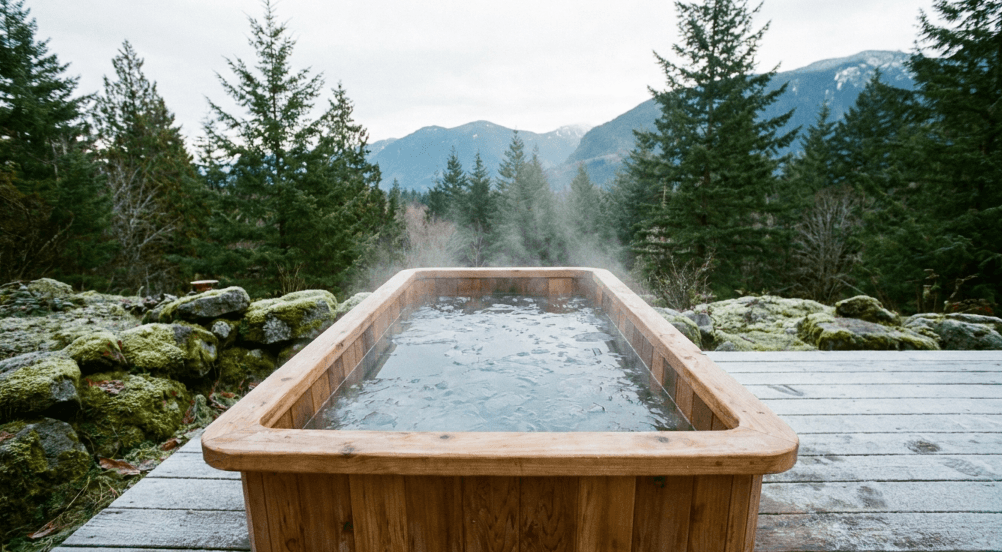
A cold plunge itself has no heater to choose, it runs on a chiller or ice, but most people asking this question are budgeting for a companion sauna to use alongside it for contrast therapy. On a tight budget, electric heat is usually the cheaper and simpler pairing because the chiller already needs its own dedicated circuit, and running one more electrical line at the same time is a smaller job than adding a separate wood stove and chimney later. Wood still wins on ongoing fuel cost if firewood is cheap or free where you live.
Why Does This Question Even Come Up for a Cold Plunge?
A cold plunge cools water, it does not heat anything, so the electric-versus-wood decision does not apply to the plunge itself. It shows up because so many budget cold plunge buyers are really planning a contrast setup, alternating hot and cold, and pricing a sauna heater at the same time as the chiller. Bundling both purchases into one budget conversation makes sense financially, since an electrician pulling a permit and running conduit for the chiller is often on-site for the heater circuit too.
What Does an Electric Sauna Heater Actually Add to the Budget?
A mid-size electric sauna heater suited to a small cabin commonly costs $600 to $1,500 for the unit itself, plus installation. Since the chiller already requires an electrician for its own circuit, adding a second circuit for the heater during the same visit often costs less combined than scheduling two separate electrical jobs. Running an electric heater typically costs somewhere around 60 cents to a little over a dollar per hour-long session at average residential electricity rates, a predictable number that is easy to budget against month to month.
What Does Wood Heat Save, and What Does It Cost Instead?
A wood-burning sauna stove avoids the electrical panel question entirely for the heating side of the project, and fuel cost can run close to zero if you already have a reliable wood supply. The tradeoff shows up elsewhere: a chimney installation with proper clearance and flashing typically adds $800 to $2,000 to a build, ash cleanup after every session, and periodic creosote removal as a genuine safety task rather than an optional one. None of that touches the chiller, but it does mean maintaining two separate systems instead of sharing one electrician’s visit.
Does the Chiller Change the Math on Which Heater Makes Sense?
Yes, more than people expect. A residential chiller commonly draws 1,000 to 2,000 watts to hold its set temperature, plus a startup surge, and needs its own dedicated circuit under most local codes. On an older or already-loaded panel, that draw alone can eat into the headroom available for a second appliance. Choosing wood heat sidesteps adding a second major electrical draw next to the chiller, which is worth considering seriously if a load calculation shows your panel is already tight before the sauna heater enters the picture.
Which Pairing Actually Fits a Tight Budget Better?
If your panel has spare capacity and you would rather have one electrician handle both circuits in a single visit, electric heat is the simpler, generally cheaper-to-install pairing with a chiller-cooled plunge. If you already have access to cheap firewood and want to keep the plunge’s electrical footprint as the only new load on your panel, wood heat avoids a chimney only if you already own one, otherwise its installation cost can erase the fuel savings for years. Pricing chiller and heater packages together, rather than separately, including current options at one specialty retailer alongside a local sauna dealer, gives a clearer combined total before you commit to either heating path.
Can You Phase the Two Purchases to Ease the Budget?
Buying the chiller-cooled plunge first and adding a sauna heater later is a common way to spread the cost over time without giving up the eventual contrast setup. If that is the plan, it is worth having the electrician who wires the chiller circuit also rough in conduit or a spare breaker slot for the future heater line, even if the heater itself is a year or two away; adding capacity during the first visit is almost always cheaper than a second dedicated service call later. The reverse order, sauna heater first, plunge later, works just as well and is common for households who already had a sauna before deciding to add cold exposure to the routine.
What About Households That Only Want the Plunge, No Sauna at All?
If contrast therapy is not the goal and a sauna is not in the plan, this whole question is moot: a budget chiller-cooled plunge, or an ice-only setup, needs no heater decision at all. That is the simplest and cheapest path for anyone whose interest is specifically in cold-water immersion rather than a hot-cold routine, and it avoids the added electrical planning that a companion sauna heater introduces.
Does Which Heater You Choose Change Anything the Research Covers?
No. The evidence behind cold-water immersion concerns the cold side of the routine, water temperature and immersion duration, not whatever heats a companion sauna. A 2025 systematic review and meta-analysis in PLoS One and a 2023 meta-analysis in Frontiers in Physiology both studied cold exposure independent of any paired heat source, and a 2012 Cochrane review on post-exercise soreness did the same. Whichever heater you choose for the sauna side, it has no bearing on what the cold plunge itself is doing physiologically.
Frequently Asked Questions
Does a cold plunge itself run on electric or wood heat? Neither. A cold plunge is cooled by a chiller or ice, not heated; the electric-versus-wood question applies to a companion heater, most often a sauna, that pairs with the plunge for contrast use.
Is wood heat actually cheaper than electric on a tight budget? Upfront, often yes if you already have access to cheap or free firewood. Month to month, electric is usually more predictable, and the real cost comparison depends heavily on local wood and electricity prices.
Does the chiller compete with an electric heater for panel capacity? Yes. Both draw from the same electrical panel, so a household already close to capacity may find that adding an electric heater alongside a chiller pushes a project toward a subpanel.
Which setup is ready to use faster on a busy schedule? Electric, generally, since it reaches temperature in well under an hour with a timer, while a wood fire typically needs closer to an hour of tending before the room is ready.
References
- Effects of cold-water immersion on health and wellbeing: A systematic review and meta-analysis, PLoS One, 2025
- Effects of cold water immersion after exercise on fatigue recovery and exercise performance: meta analysis, Frontiers in Physiology, 2023
- Cold-water immersion (cryotherapy) for preventing and treating muscle soreness after exercise, Cochrane Database of Systematic Reviews, 2012